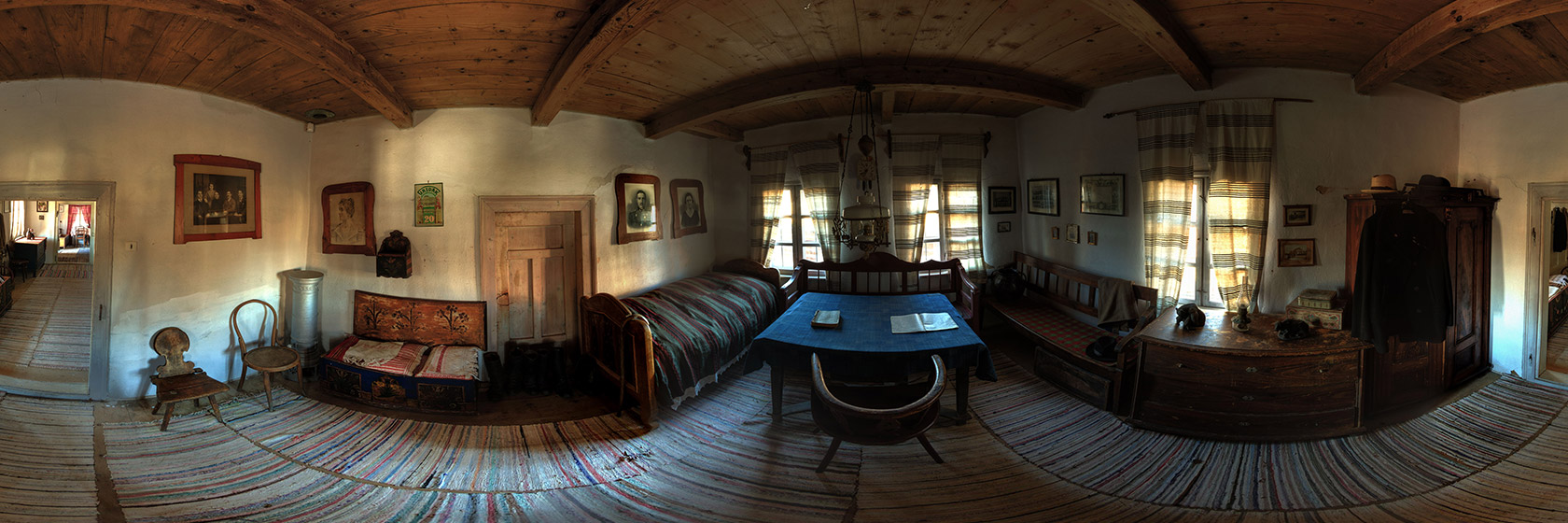
Ethnographic Museum
The Hungarians in proudly mention the ethnographer Ferenc Pozsony born here, university professor in Kolozsvár and academician who, as a result of several decades of collecting work, has created an ethnographic museum in the neighbourhood of his birthplace with a very valuable material. On 14 September 2003, the first permanent exhibition was opened on the site of a folk house, in a baroque building, on the traditional folk art of Moldavian Csángó Hungarians. The initiators of the institution founded the Pro Museum Association in 2004, which are the owner and operator of the folk house and the Csángó Collection.
The Csángó Ethnographic Museum in Zabola was involved in the structure of the Székely National Museum in Sepsiszentgyörgy in 2005, which ensures the professional and institutional supervision of this external department. The institute primarily collects, systematizes and displays the material and intellectual culture of the Csángó Hungarians in Moldavia. On the ground floor of the Csángó Ethnographic Museum, the traditional dwellings of Gorzafalva, Lészped and Pusztina and a workshop equipment, tools and products for a pottery in Gorzafalva can be viewed. In the framework of the permanent exhibition, the Moldavian Csángó Hungarians’ life can be followed from birth to death, through their sacred and profane objects.
In addition to the Csángó Collection, the Museum has material of the Székelys, the Romanians, Transylvanian Saxons and Gypsies of Zabola as well. In the Székely House, visitors can get learn about Zabola's memories of local and cultural history, pictures, objects and documents related to the Basa and Mikes family. Visitors can also see fireplace tiles from the 16th to 19th century, recent local attires, tools, and products of folk crafts, memorabilia of the First and Second World Wars as well as farmer family’s clean room that reflects the local housing culture of the 1930s.
SPONSORS
Sponsors


